4 Key Drivers of Grocery Retail Competition in 2025

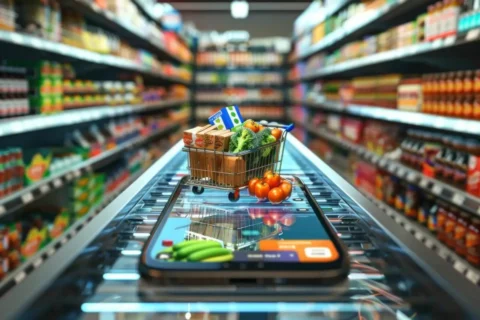
Mobile-phone-with-mini-food-cart-in-grocery-store

The grocery retail landscape is undergoing a rapid transformation, driven by evolving consumer expectations and technological advancements. Understanding the key forces shaping competition is crucial for retailers aiming to thrive in the dynamic 2025 market. 

This article delves into the four pivotal drivers that will dictate success in the grocery sector, examining how value-driven consumer behavior, the rise of omnichannel retail, the impact of technological innovations, and the growing focus on sustainability and health consciousness, are reshaping the competitive playing field.

1. Value-Driven Consumer Behavior

Faced with a variety of economic pressures, North American consumers are increasingly focused on affordability and value. In the grocery sector alone, food-at-home (grocery) prices in the U.S. are forecast to increase by 3.3% in 2025, according to the USDA Economic Research Service. In Canada, the Food Price Report 2025 predicts that overall food prices will increase by 3% to 5%. As of February 2025, Canada’s Consumer Price Index already showed a 2.8% increase in food purchased from stores over a 12-month period.

As a result of the steady rise in the cost of living, today’s consumers are increasingly prioritizing value, seeking out deals, and opting for private-label brands. Economic uncertainties and changing spending habits are driving this trend, and it means that retailers must put even more focus on tactics that these hard-pressed buyers will value:

Competitive pricing

Competitive pricing is a vital tactic in grocery retail because it directly addresses the price-sensitive nature of consumer behavior in this sector. Groceries are essential goods, and shoppers are often comparing prices across multiple stores to maximize their purchasing power.

By offering competitive prices, retailers can attract and retain customers, drive increased foot traffic, and boost sales volumes. In a market where margins can be tight, strategically managing pricing to remain competitive is crucial for maintaining a strong market position and ensuring long-term profitability.

Adopting approaches such as pricing automation is becoming more and more important, in order to respond to fast shifts in the market and maintain a competitive edge.

Promotions

In the 2025 grocery landscape, promotions remain a powerful tactic due to their ability to drive immediate sales and enhance customer engagement. With increasingly price-conscious consumers and a plethora of shopping options, well-executed promotions, such as targeted discounts, loyalty rewards, and bundled deals, can incentivize purchases and foster brand loyalty.

These promotions, particularly when integrated with omnichannel strategies, not only attract new customers but also encourage existing ones to increase their basket size and frequency of visits. In a market saturated with choices, promotions provide a compelling reason for consumers to choose a particular retailer, boosting market share and optimizing inventory turnover.

Offering high-quality private-label options

Offering high-quality private-label options in 2025 is a strategic imperative for grocery retailers. In a market where consumers are increasingly value-driven and seeking unique experiences, private-label brands provide a way to differentiate from competitors.

By investing in product development and quality control, retailers can offer exclusive, premium alternatives to national brands at competitive prices. This not only boosts profit margins but also cultivates customer loyalty, as shoppers perceive the retailer as a source of trusted, high-value products.

In an era of heightened brand awareness and digital transparency, well-executed private-label strategies can enhance a retailer’s reputation and create a distinctive brand identity, driving long-term customer engagement and market share.

2. The Rise of Omnichannel Retail

In 2025, the integration of online and offline shopping experiences is crucial. Consumers expect seamless transitions between digital and physical channels.

This involves optimizing online ordering, delivery services, in-store pickup, and leveraging technology to enhance the in-store shopping experience.

Online grocery shopping is growing rapidly, projected by Forrester to reach $334 billion globally by 2025. Retailers will need to optimize their e-commerce capabilities, including seamless delivery and inventory management systems, to compete effectively with digital-first competitors.

3. Technological Advancements 

Technology is transforming grocery retail in various ways, including: 

Retailers need to invest in technology to improve efficiency by investing in digital platforms and automation to enhance customer convenience and engagement, and to personalize the customer experience, in order to stay competitive.

4. Sustainability and Health Consciousness

Consumers are increasingly concerned about sustainability and health. They are seeking products that are environmentally friendly and promote well-being.

Supermarkets can respond to this increased preoccupation with wellness in the food industry by offering sustainable packaging, locally sourced products, and healthy food options.

Retailers can also focus on reducing food waste and improving energy efficiency.

Overall, retailers are innovating store formats and product offerings to cater to a variety of new customer expectations, including promoting health-conscious items, sustainable packaging, and ready-to-eat options. Differentiation through unique and healthy experiences and merchandise will be key to maintaining competitiveness.

JRTech provides the digital tools supermarkets need to stay competitive

The forces listed above are creating a dynamic and competitive landscape for grocery retailers in 2025. Adapting to these trends is essential for success in this landscape of economic uncertainty and evolving consumer preferences.

JRTech provides retailers with the digital display technology required to implement the rapid changes and personalized experiences that today’s consumers demand.

As the leading provider of Pricer Electronic Shelf Labels in North America, we provide digital interfaces that can display promotions, nutritional information, and more. As prices fluctuate, the information on ESLs can be changed rapidly, allowing for a successful dynamic pricing strategy that responds to the economic reality of the times. 

The Electronic Shelf Labels offered by JRTech are a practical, environmentally-responsible, proven long-term solution for grocery store labeling. Contact us to learn more.

What is a Dynamic Pricing Strategy and How Does It Work?

Image-of-person-adjusting-prices-on-laptop-example-of-dynamic-pricing

Dynamic pricing is a game-changing strategy that’s revolutionizing how companies set prices for their products and services. This sophisticated approach uses real-time data and advanced algorithms to adjust prices on the fly, responding to market demand, competitor actions, consumer behavior, and specific business goals.

Although it has been used for decades in some industries, such as public transportation, electricity, entertainment, leisure, hospitality and travel, technological innovations and the integration of AI capabilities are now making dynamic pricing both possible and practical in retail and ecommerce environments.

This flexible price strategy – also called surge pricing, demand pricing or variable pricing – has become a powerful tool for optimizing sales and profitability.

What is dynamic pricing?

Dynamic pricing is a sophisticated pricing strategy that relies on advanced algorithms and artificial intelligence to adjust product or service prices in real-time based on various factors, including demand, inventory levels, consumer behavior, market trends and competitor pricing. It can be implemented in various retail and ecommerce environments.

Examples of dynamic pricing

In the grocery sector, for example, a variable pricing strategy can help manage supply and demand by changing prices to incentivize purchases, reduce waste, and optimize profit margins. This approach can be particularly effective for perishable items, where prices can be lowered to encourage sales before products expire.

In the pharmaceutical industry, adjusting medication prices in real-time can help manage supply chain challenges, prevent drug shortages, and maintain a balance between profitability and accessibility. For instance, prices might be adjusted during winter months to meet increased demand for respiratory medications, or during monsoon seasons for medicines addressing waterborne illnesses.

How does dynamic pricing work?

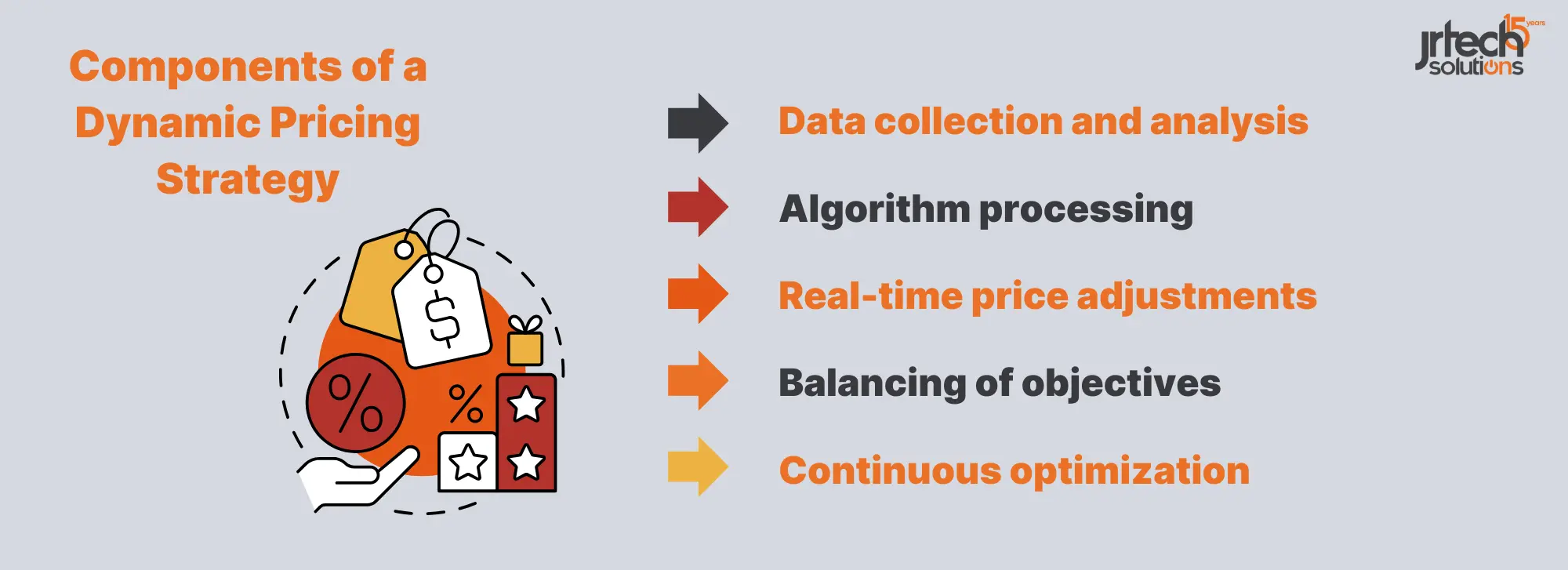
KEY Takeaway: An effective dynamic pricing strategy relies on data collection and analysis, algorithm processing, real-time price adjustments, balancing of objectives and continuous optimizing.

There are five main components to an effective dynamic pricing strategy:

Components-of-a-dynamic-pricing-strategy-graphic-JRTech

1. Data collection and analysis

First, dynamic pricing algorithms collect and analyze vast amounts of data, including:

  • Historical sales data, including promotions
  • Current market demand
  • Competitor pricing
  • Inventory levels
  • Customer behavior
  • Seasonal trends
  • External factors (e.g., weather, events) 

The data collected will depend on the type of retail environment, the sector of activity, and the unique priorities and objectives of the business.

2. Algorithm processing

Advanced algorithms, often powered by artificial intelligence and machine learning, process this data to determine optimal pricing. These algorithms can:

  • Identify significant parameters affecting price,
  • Generate mathematical models based on these parameters,
  • Learn and adapt over time to improve accuracy.

3. Real-time price adjustments

Based on the algorithm’s output, prices are adjusted in real-time to reflect current market conditions and maximize profits. This can involve:

  • Increasing prices during high demand periods,
  • Lowering prices to attract customers during off-peak times,
  • Matching or undercutting competitor prices.

4. Balancing of objectives

Dynamic pricing aims to find the optimal price point that balances multiple objectives, such as:

  • Maximizing revenue and profit margins
  • Maintaining customer satisfaction
  • Optimizing inventory management
  • Responding to market changes quickly.

5. Continuous optimization

The process is ongoing, with algorithms continuously learning from new data and adjusting pricing strategies accordingly.

Dynamic pricing technology: what retailers need to make variable pricing a reality

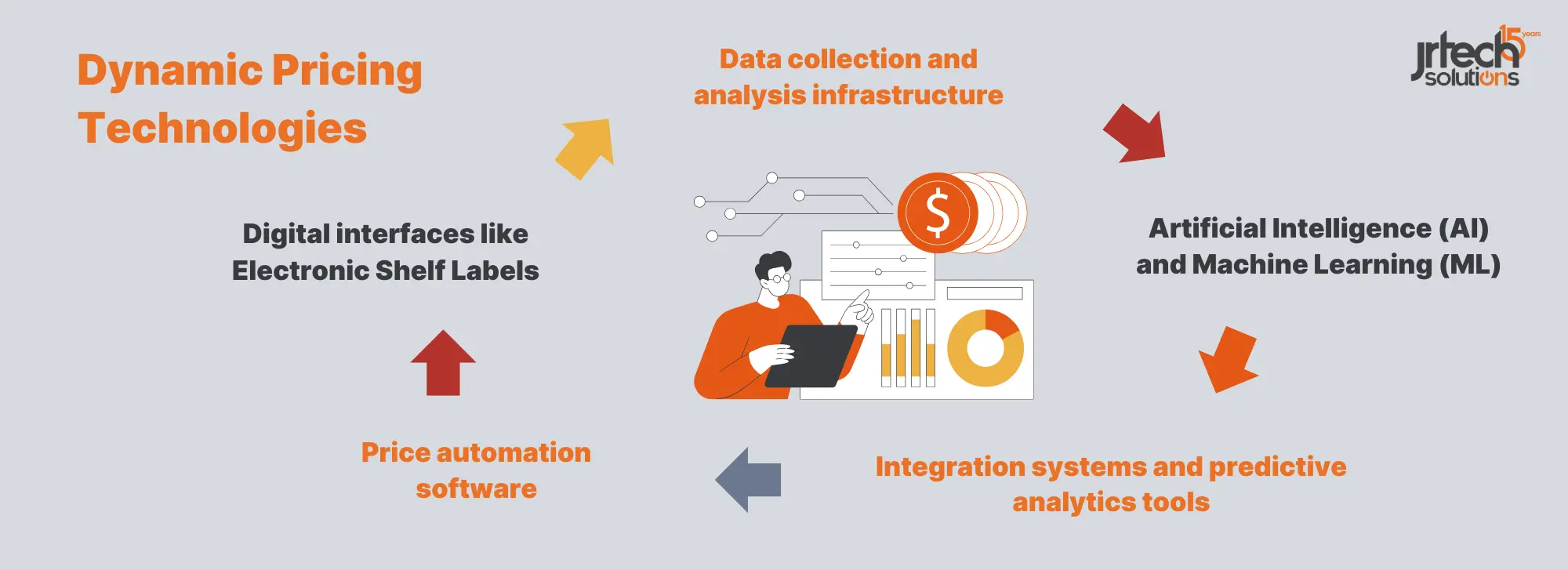
KEY Takeaway: Dynamic pricing technology implements advanced data collection and analysis capabilities via AI and ML to integrate systems and predict outcomes. An effective strategy also requires price automation software and connected digital displays.

To implement dynamic pricing effectively, businesses need to leverage several key technologies:

  1. Data collection and analysis infrastructure: Robust systems are required to gather and process large volumes of data from various sources, including real-time data, historical sales data, market trends, competitor pricing, and customer behavior. Cloud-based solutions provide the necessary scalability and processing power to handle complex pricing algorithms and large datasets.
  2. Artificial Intelligence (AI) and Machine Learning (ML): These are the core technologies powering modern dynamic pricing systems. AI and ML algorithms analyze the vast amounts of data gathered in order to predict demand, understand customer behavior, and determine optimal pricing in real-time.
  3. Integration systems and predictive analytics tools: These tools allow seamless integration with existing e-commerce platforms, inventory management systems, and other relevant business software. They are used in combination with predictive analytics tools to forecast demand, identify pricing trends, and optimize strategies based on historical and current data.
  4. Price automation software: Businesses will also need software that can automatically adjust prices based on the insights generated by AI algorithms without constant human intervention.

Digital interfaces: In retail environments, Electronic Shelf Labels provide the required digital interface for displaying changing prices in a practical manner on a large scale. Digital price tags make it possible to adjust prices on multiple products as many times as necessary from a central management system. This wireless technology is key to implementing a dynamic price strategy in one or more brick-and-mortar retail outlets.

Dynamic Pricing Technologies

Dynamic pricing methods: choose the best approach for your business

There are many types of dynamic pricing models, and businesses must choose the most appropriate and relevant approach based on their sector and goals. Here are a few examples of dynamic pricing methods that are relevant to ecommerce and retail:

Time-Based Pricing

This method adjusts prices based on specific time periods, such as peak hours, seasons, or weekdays versus weekends. It can also reflect business goals related to inventory management. For example, retailers often adjust the price of older collections when new products arrive in-store. Delivery services can also be adjusted based on time, with same-day delivery costing more than next-day delivery.

Segmented Pricing

This strategy involves charging different prices to different customer groups based on their characteristics or behaviors. For instance, high-value customers might be offered higher prices if they prioritize service speed and quality over price. Senior citizens may be offered lower prices based on their age and status.

Demand-Based Pricing

This approach adjusts prices in real-time based on current market demand. Prices are raised during periods of high demand and lowered during periods of low demand. Airlines and hotels have been implementing this form of dynamic pricing for many years, but the advanced capabilities of AI are making it possible to implement this type of pricing strategy with more precision in retail environments like grocery stores. Whereas pricing adjustments made according to season or festival have always been the norm, today’s prices can also reflect global market trends and predicted fluctuations in stock. This method is sometimes referred to as inventory-based pricing.

Benefits of dynamic pricing

There are several significant advantages to using a dynamic pricing strategy in retail. While the overall result will be maximized revenue and profit margins, a flexible price strategy will also impact inventory, competitiveness, the ability to adjust in changing market conditions, cash flow, and the practical use of data.

Improved inventory management: By adjusting prices based on stock levels, retailers can better manage their inventory, promoting sales of slow-moving items and maximizing profits on high-demand products.

Flexibility and competitiveness in various market conditions: Adapting to changing market conditions in real time, including during times of economic uncertainty or disruption, allows retailers to stay competitive in a fast-moving market.

Better customer insights: The process as a whole allows retailers to gain an improved understanding of customer preferences, buying habits, and price sensitivity. It’s all about enhanced data collection as well as more focused use of data-driven insights.

Optimized cash flow: Dynamic pricing allows retailers to optimize their pricing based on real-time demand, inventory levels, and market trends, leading to increased revenue and profitability. Even during periods of lower demand, it can help you maintain revenue streams by adjusting prices to stimulate sales.

The future of retail is flexibility

The key to an effective dynamic pricing strategy is to remain flexible. By leveraging sophisticated algorithms and real-time data analysis, businesses can make informed pricing decisions that respond quickly to market changes and consumer behavior, ultimately aiming to maximize profitability and competitiveness.

There is no better time to create a dynamic pricing system that is responsive, accurate, and founded on proven technology.

As the leading provider of Pricer Electronic Shelf Labels in North America, JRTech provides retailers with the digital display technology they need to implement an effective dynamic pricing strategy. Our labels can display stock levels, promotions, nutritional information and QR codes. They are a practical, environmentally-responsible long-term solution for retail labeling that has already taken numerous large-scale retailers to the next level. Contact us to learn more.